
It consists of three main components – assets, liabilities, and shareholders’ equity. The retained earnings calculation is important for shareholders and investors as it reflects the company’s ability to generate profits and sustain growth. A healthy amount of retained earnings indicates a stable and successful business, while a net loss or low retained earnings may raise concerns about the company’s financial health.

Q. How can investors access a company’s Retained Earnings data?
Returned earnings is a term often used to refer to the earnings that a company has generated over time and then reinvested back into the business. Retained or returned earnings provide a clear indicator of a company’s long-term profitability and the capacity to self-finance its operations and growth. An increase in returned earnings suggests that the company is growing its reserve of assets that can be used to weather future financial uncertainties or fund new opportunities. Companies must decide on the balance distribution of their retained earnings.
Small-Business Money Mistakes (and How to Avoid Them)
It’s also a key component in calculating a company’s book value, which many use to compare the market value of a company to its book value. This financial metric is just as important as net income, and it’s essential to understand what it is and how to calculate it. This article breaks down everything you need to know about retained earnings, including its formula and examples. This article explains how to find your company’s retained earnings.
Result Interpretation
- It also displays all dividends- cash and stock- that have been given to shareholders per accounting period.
- In addition to providing the company with capital for growth, retained earnings also help improve its financial ratios, such as its return on equity.
- When a business earns a surplus income, it can either distribute the surplus as dividends to shareholders or reinvest the balance as retained earnings.
- Since Company A made a net profit of $30,000, we will add $30,000 to $100,000.
- To better explain the retained earnings calculation, we’ll use a realistic retained earnings example.
- This math not only shows profits kept but helps shape a clever retained earnings policy important for business valuation.
Understanding Retained Earnings is crucial for investors and business owners alike. This financial term holds the key to a company’s financial health and growth prospects. In this article, we’ll delve into the fundamentals of Retained Earnings, explaining what it is, how to calculate it, and why it matters. Both revenue and retained earnings are important in evaluating a company’s financial health, but they highlight different aspects of the financial picture.
The Essential Guide to Inventory and Warehouse Management with Total Office Manager eBook
Retained earnings are one element of an owner’s equity, or a shareholder’s equity, and are classified as such. Much like any other part of a business, there can be downsides to retained earnings. Retained earnings are a shaky source of funds because a business’s profits change. This must come before the deduction of operating expenses and overhead costs.

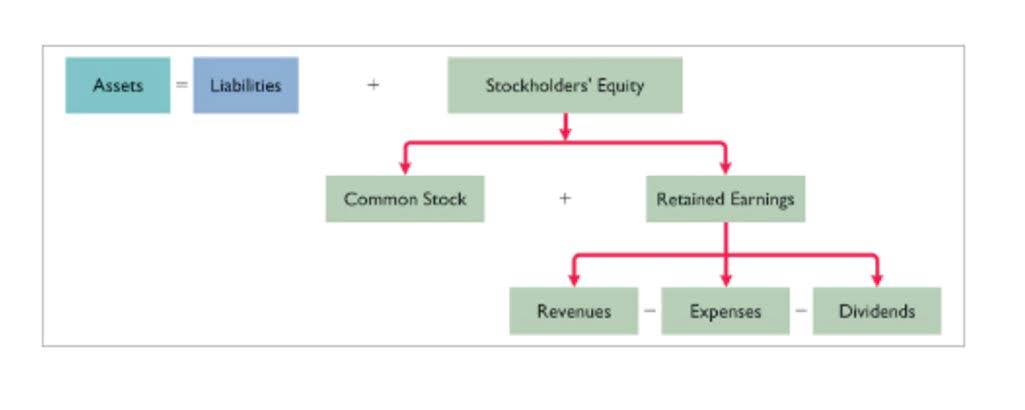
A company with a high level of retained earnings indicates that it has been able to generate consistent profits, which can be used for reinvestment in the business or to fund future growth opportunities. You can retain earnings, pay a cash dividend to shareholders, or choose a hybrid solution that addresses both. The details are up to you, and you should use what you’ve learned here to make smart decisions regarding retained earnings and the future of your business. You can stay on top of your earnings, get accurate reports, https://www.bookstime.com/ and easily track transitions with accounting software like QuickBooks. Depending on your goals, you can look at retained earnings in a few different ways to gain insight into a company’s overall financial health.
Extensive retained earnings hints towards profitability of its business. Alternatively, if retained earnings remain low or negative for extended periods of time it may suggest lack of growth opportunity. Organizations use their retained profits as fuel to expand their business operations. High retained earnings indicate a company’s ability to reinvest in itself, which shows stability and a long-term focus on growth. Placing funds into business development enables companies to maintain market leadership through time. When a Accounting Errors company gives dividends, it subtracts from its retained earnings.

Find your net income (or loss) for the current period
Retained earnings are calculated by taking the beginning-period retained earnings, adding the net income (or loss), and subtracting dividend payouts. Dividends paid are the cash and stock dividends paid to the stockholders of your company during an accounting period. Where cash dividends are paid out in cash on a per-share basis, stock dividends are dividends given in the form of additional shares as fractions per existing shares. Both cash dividends and stock dividends result in a decrease in retained earnings. The effect of cash and stock dividends on the retained earnings has been explained in the sections below. In the case of the yearly income statement and balance sheet, the net profit, as calculated for the current accounting period, how to calculate retained earnings would increase the balance of retained earnings.
Leave a Reply